




















Blog
Kawat Besi Galvanis: Kawat Logam Anti-Karatan yang Andal untuk Konstruksi, Pagar, dan Proyek Pengikatan Sehari-hari

Pendahuluan
As a foundational metal raw material widely demanded across construction, agricultural planting, industrial processing and daily household scenarios, galvanized iron wire stands out for its balanced durability, cost performance and flexible usability. It undergoes professional galvanizing treatment on the base iron wire surface to form a tight protective zinc layer, solving the pain point that ordinary iron wire easily oxidizes and rusts after long exposure to humid air and rain. It has become a staple bulk procurement item for global engineering contractors, fence manufacturers, farm operators and handicraft studios. This article covers its production logic, core performance merits, mainstream application directions and practical purchasing tips for overseas buyers.
Production & Craft Overview of Galvanized Iron Wire
The manufacturing workflow follows strict standardized procedures: raw low-carbon iron rods are drawn step by step into iron wires of preset diameters first. Manufacturers adopt two mainstream galvanizing processes for surface anti-corrosion treatment to match different usage environments:
- Hot-dip galvanizing: The wire is fully immersed in high-temperature molten zinc liquid. The thick, firmly bonded zinc coating delivers top-tier anti-corrosion performance, adapting to outdoor open-air, coastal high-salt fog and humid construction site settings for long-term use.
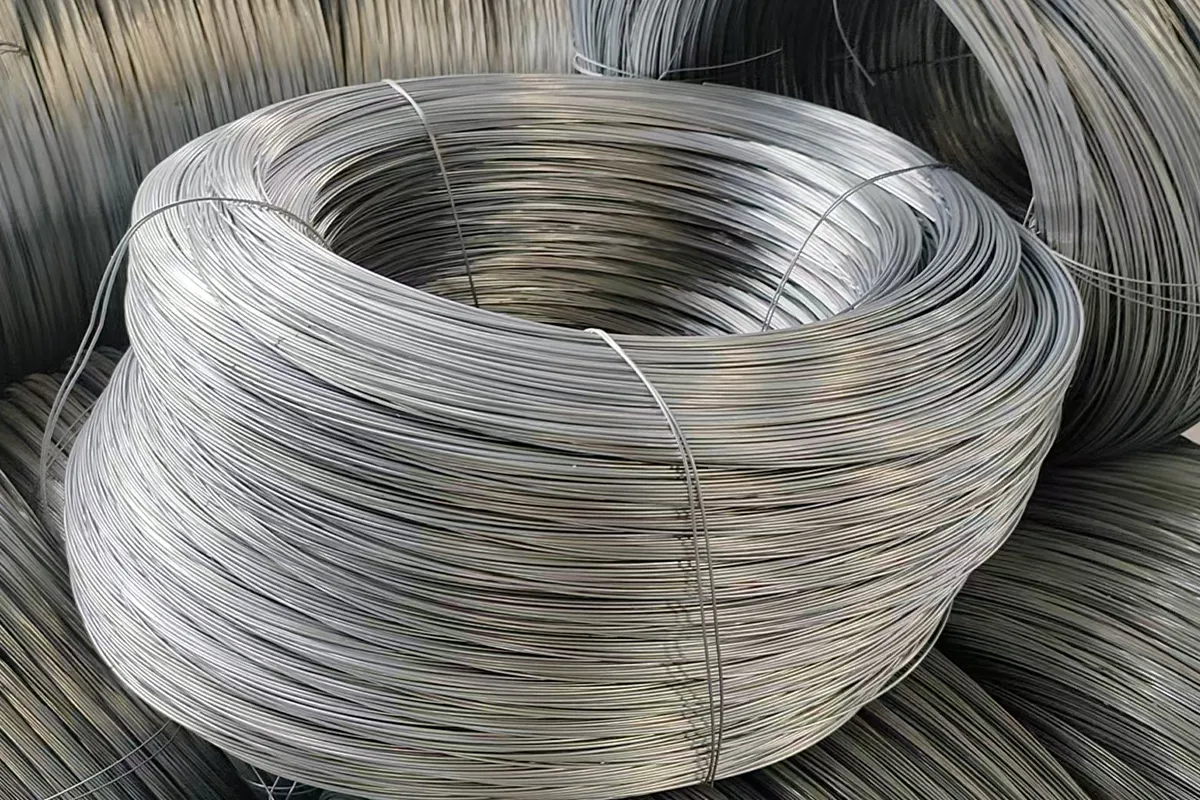
- Electro galvanizing (cold galvanizing): The zinc layer is formed via electrolysis. The coating surface is smooth and uniform with neat texture, fitting indoor binding, delicate handicraft processing and short-cycle temporary fixing tasks well. Finished products are wound into compact coils for convenient stacking, transportation and on-site unwinding use, just like the stocked coil products shown in the picture.
Key Performance Advantages
Strong Anti-Rust & Weather Adaptability
The dense zinc barrier blocks direct contact between iron core and oxygen, rainwater, saline substances. Hot-dip galvanized variants can maintain stable performance for years under outdoor harsh climate fluctuations without frequent maintenance.
Stable Tensile Strength & Good Ductility
Made of premium low-carbon steel base material, the wire balances sturdiness and pliability. It can be bent, twisted and knotted manually or by machine without brittle breakage, perfect for tying steel bars, weaving mesh and handmade modeling work.
Broad Size Selection & High Cost Efficiency
A complete range of wire gauge options covers ultra-fine specifications for craft use up to thick wires for heavy-duty construction binding. Its unit price is far lower than special alloy metal wires, greatly cutting material expenditure for large-scale engineering and bulk production orders.
Convenient On-Site Operation
Coiled packaging avoids messy tangling during carrying and deployment; workers can cut the required length freely according to actual task demands, suiting scattered small jobs and continuous large-batch construction work alike.
Common Application Scenarios
Construction Engineering Sector
It serves as the core binding material for reinforcing steel bar fixation on building sites, temporary scaffolding tying and construction component reinforcement, being an indispensable consumable for civil engineering.
Fence & Mesh Manufacturing Industry
Mass used to weave breeding farm fences, garden boundary mesh, highway protective wire mesh and storage isolation nets. The anti-rust coating extends the outdoor service life of finished fencing products notably.
Agricultural & Horticultural Work
Farmers use it to fix vine crop supports, bind greenhouse frameworks, bundle harvested crops and enclose livestock breeding zones, coping well with outdoor farm humidity changes.
Handicraft & Daily Household Use
Fine-gauge galvanized iron wire is popular for handmade wrought iron decor, gift wrapping, home item repairing and small object hanging and fixing needs.
Logistics & Packaging Field
Medium-thickness wire works for bundling heavy cargo pallets and reinforcing bulky package structures during long-distance transportation.
Practical Buying Guide for Global Buyers
- Match galvanizing type with usage environment: Pick hot-dip galvanized wire for permanent outdoor projects and coastal areas; choose electro galvanized wire for indoor delicate processing to control procurement costs.
- Confirm exact wire diameter requirements: Thinner gauges suit craft binding, thicker ones are for heavy construction tying and mesh weaving.
- Inspect coating quality before bulk purchase: Qualified products have uniform zinc coverage without missing plating spots, peeling or uneven agglomeration.
- Check coil winding tightness: Neatly coiled wire reduces knotting waste during construction and processing.
Closing Summary
Galvanized iron wire is a versatile foundational metal supply integrating economy, practicability and anti-corrosion performance. No matter you run large infrastructure projects, produce fencing products, manage agricultural plantations or run handmade craft workshops, it can fulfill diversified binding and manufacturing demands steadily. It remains one of the most favored bulk metal sourcing choices for international purchasers year round thanks to mature production technology and flexible specification customization support.